
Interview: Discussing persecution, reunion and immigration with Julia Elihu and Ava Lalezarzadeh, the duo behind Oscar qualifying Iranian short 'In the Garden of Tulips'.

I had the pleasure of speaking to director Julia Elihu and writer Ava Lalezarzadeh whose collective efforts recently bore fruit via In the Garden of Tulips, an award-winning Iranian short based on Lalezarzadeh ‘s mother’s experiences, which is also a strong contender for the 2025 Oscars.
Much like Jasmin Mozaffari’s Motherland which explored familial strains, persecution, etc, this short also revolves around an uncertain future, as a father and daughter embark on a final road trip together to escape a bleak future at the height of the Iran-Iraq war. And much like the folk song about green plums (Goje Sabz) that features in a scene as the pair breaks into song, the short also balances both the sweet and sour outcomes of this journey.
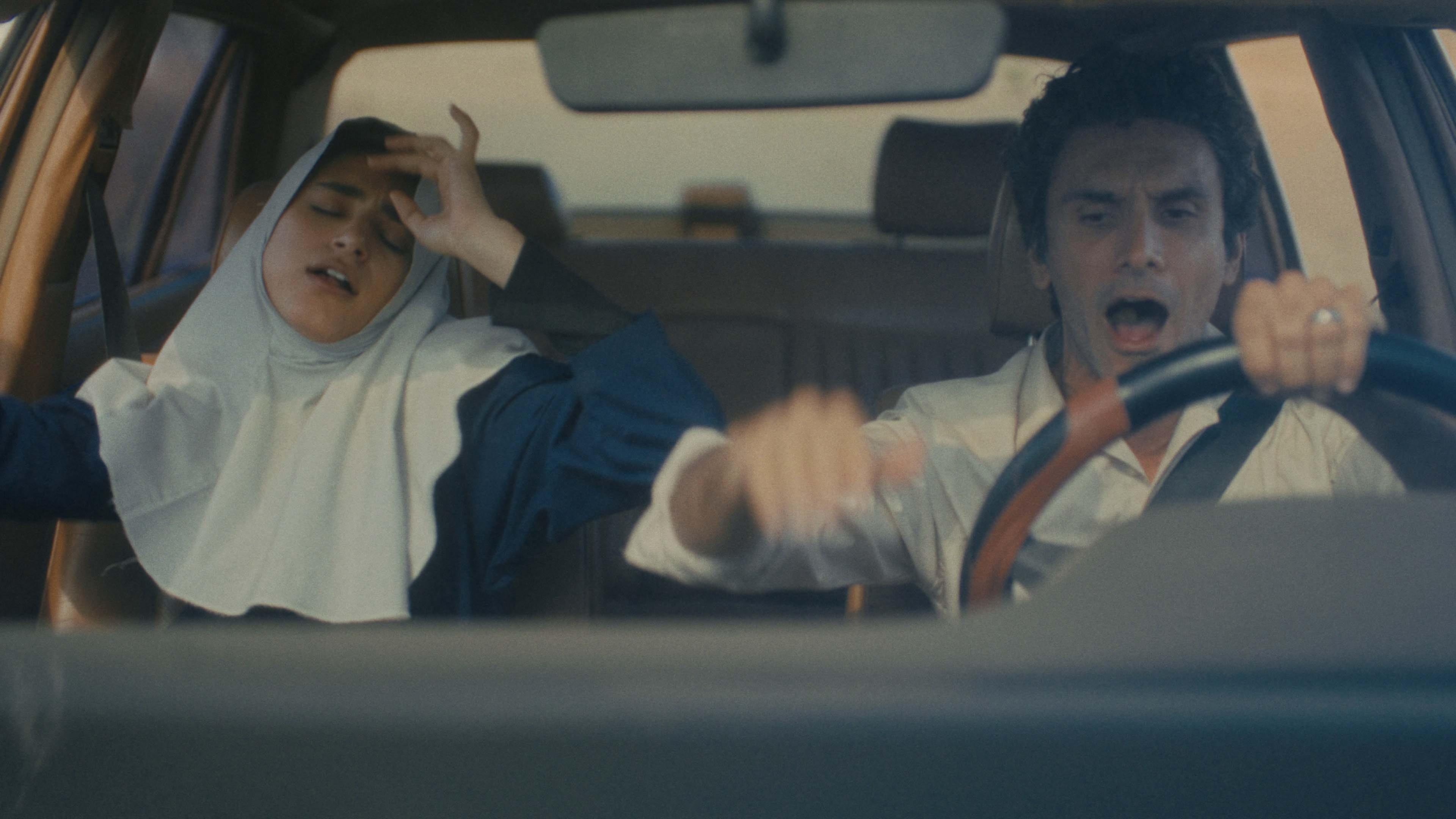
Simultaneously, In the Garden of Tulips also offers a brief, intricate sociocultural insight into a scenario wherein persecution based on religion is rampant, but hope isn’t too scarce either…even if this same hope hinges on a gutting and imminent separation from one’s home country and from a parent/guardian who would sacrifice everything for their child’s safety in a cruel world.
1) Congratulations to both of you for qualifying for the upcoming Oscars. Could you share with our readers about your respective backgrounds, and especially what are the kinds of stories that you both are drawn to or that you specialise in as creatives?
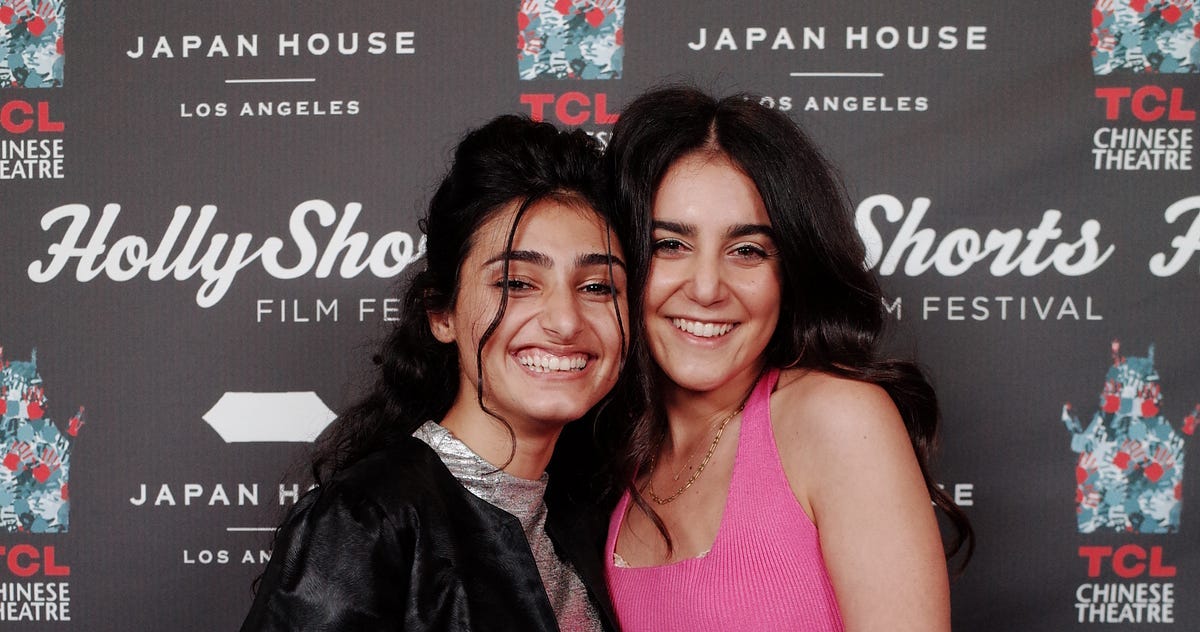
Ava Lalezarzadeh: Hey, For the Love of Cinema! My name is Ava and I’m the screenwriter and actor of “In the Garden of Tulips.” I grew up with my family’s stories of religious persecution and of fleeing Iran. Often these stories were shared cuddled up on the couch between forkfuls of fruit and sips of tea— life and joy continued. It’s been a wonderful journey to now be able to develop my craft not only as an actor but also as a writer with “In the Garden of Tulips”, inspired by my mom’s journey. Our film follows 16-year-old Caroline on the final car ride with her father through Birjand, the countryside of Iran, at the height of the Iran-Iraq War in 1988. I play my mother Caroline. I wrote this story because my mom calls this one of the most pivotal moments in her life— where she was thrust into adulthood in a singular moment. I wanted our film to be a quiet examination of how this father-daughter duo hold each other up in their laughter and sorrow, fighting for togetherness as they get closer to separation. I think as a consequence we made a film that shows the real-life impact of war and persecution. But I went into it really wanting to share my mom’s story of the day she had to grow up. I am in awe of the resiliency of the human spirit in these pivotal junctions in one's life. Any story that prioritizes character and relationships, is a story I’m hungry to explore. I think when we do that, we inadvertently reveal something bigger about our world and the universality of our existence.
Julia Elihu - Hey there! I’m Julia, the director and editor of “In the Garden of Tulips.” I've always been drawn toward the arts, ever since I was young. A funny story my mom loves to share is that when I was in Kindergarten, I actually won an award at the Boys and Girls Club for spending the most time in the art room! Almost twenty-two years later not much has changed. I found my way into film specifically through a high-school after-school program where I fell in love with the medium and its ability to blend so many art forms: imagery, sound, storytelling, music, and more. However, when deciding whether to pursue film as a career, I knew I’d only do it if I could tell stories that truly mattered to me. That journey began with my own family’s story. My family fled Iran at the onset of the 1979 Revolution after facing religious persecution as Jews. Growing up, I heard countless stories that shaped me: my uncle Shahim jumping from a second-story balcony to escape the Iranian Morality Police, my grandfather starting a plastic factory alongside his brothers that introduced Hula Hoops to Iran, my mom visiting Los Angeles at age 11 and never being able to return home, my dad recalling summer nights spent sleeping in the backyard in Tehran, and my great-uncle Habib Elghanian, who was, unfortunately, the first Jew executed during the revolution. These stories ignited a fire in me to pursue filmmaking—not just to entertain, but to open hearts and minds to experiences they may have never encountered. I hope my work fosters empathy, showing that no matter where we come from or how we identify, we’re all more alike than different.
2) Is this your first collaboration and could you share some details on the creative process while working together on ‘In the Garden of Tulips’? Were there any creative differences or was it mostly smooth sailing?
Ava: So, Julia and I met when we were in college because Julia was looking for actors who were Persian to star in her short film “Yasamin.” Julia, do you wanna tell the story?
Julia: Back in 2018, I was making the short “Yasamin” based on my mom’s story of immigration! The film follows an 11-year-old girl who must navigate the trials and tribulations of assimilation through a single unibrow… I needed someone to play Yasamin’s supportive and playful older cousin, Roxanna. Of course, finding a young Farsi-speaking actor in the US was no easy feat. I started by messaging every girl on BackStage Casting that looked Iranian or had an Iranian-sounding last name. Thankfully one of those people was Ava! Not only did we learn that we had very similar backgrounds, but she had just the bubbly demeanour the character needed. The rest is history from there!
Ava: During the pandemic, Julia and I were actually living together. I was writing the feature for “In the Garden of Tulips” and wanted to make a proof of concept off of it. I narrowed in on the final car ride scene. I brought the script to Julia and asked her if she’d want to direct it, and thankfully, she said yes!
Julia: What drew me to the script was the quiet heroism of Caroline’s character and the meditative nature of the story with those joyous human moments sprinkled in. I really let those details guide me in my creative process. Rather than pushing emotions onto the viewer through a dramatized score or sound design, I wanted to keep things simple, allowing the viewer to almost be the 3rd passenger in the car singing the Goje Sabz song alongside Cari and Sharif. I let that same grounded and realistic approach guide me in the direction of our amazing cast. Rehearsals were filled with playful improv sessions where Ava and Iman fully stepped into their roles as father and daughter, bringing to life something so genuine. A fun anecdote we love to share is that while we had practised the Goje Sabz scene many times prior, what came out on set was a totally different tune that Ava and Iman made up on the spot. It felt so fresh and candid, and those are the moments I live for as a director!
Ava: Shooting the Goje Sabz scene was so fun. Iman Nazemzadeh, our actor who plays Sharif, is a gem of an actor to work with. I think any collaborative process, especially one that is so intimate about the portrayal of our own families, is bound to have some conflict. But even so, I’m so proud of the film we made. From the very beginning, Julia and I were pretty aligned creatively and had a similar sensibility of how we wanted the film to look and feel. I was in love with Julia’s creative vision of how she planned to bring the script and its themes to life. She added a really beautiful song at the end of the film—I won’t spoil it—that continues to bring me to tears every time I watch the film.
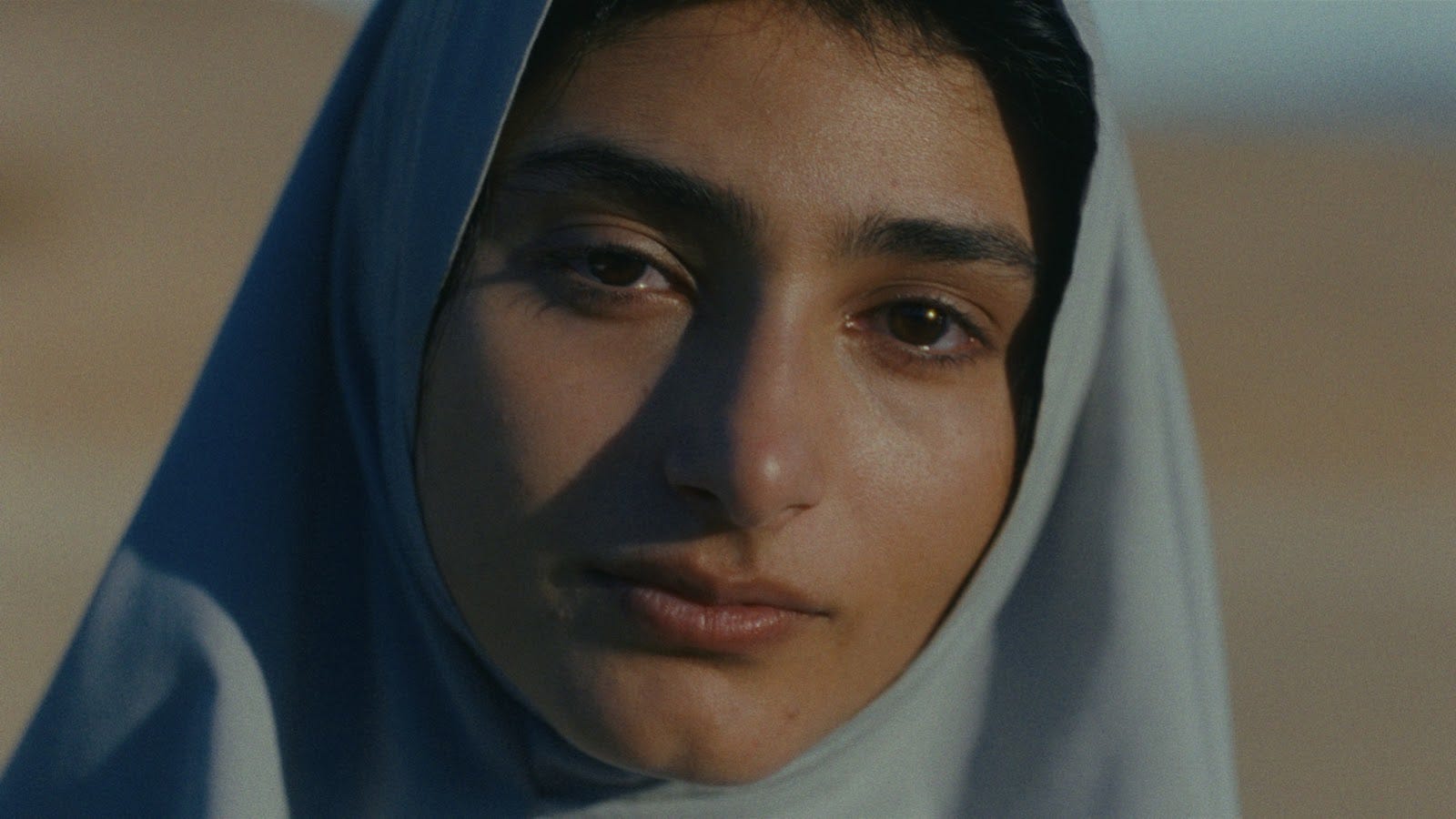
Julia: Knowing how close this story is to Ava’s heart, I’m so glad I had the creative liberty to put my own heart into the project and bring something to life we’re proud to share. It certainly isn’t easy to share a story so personal, so I’m grateful for that opportunity. The song at the end of the film is something I had heard a couple of years prior and stored away for a future project. The singer, Ziv Yehezkel is an Iraqi-Jewish rabbi and his rendition of the Hebrew prayer the Shema touched my heart because it reminded me of the way the cantor at my temple growing up used to sing the prayers. My cantor was Yemini. Being that our story follows a Mizrahi protagonist I felt that tune was only fitting as Caroline is now driving towards freedom. And, I was editing the film and saw Ava’s chilling last look at the camera, I knew it was the perfect moment to use it. While I’ve seen the film a hundred times now, it also touches my heart every time I watch it.
3) Watching this short brought to mind French-Iranian graphic novelist and filmmaker Marjane Satrapi’s coming of age ‘Persepolis’ which was set against the backdrop of the Iranian Revolution, and since both examine a similar scenario where persecution due to religion and culture from oppressive forces were or still are rampant. Are there any fellow Iranian creatives whom you both look up to or whose works influence your storytelling and filmmaking styles?
Ava: I love “Persepolis”! My mom actually has a very similar emigration story. Kiarostami was a big inspiration for us.
Julia:” Persepolis” is one of my favourite movies! Satrapi’s incredibly human depiction of her story has always been a big inspiration. And yes! Kiarostami’s film “Taste of Cherry” was the perfect inspiration for this film. While “In the Garden of Tulips” is a portrait of Caroline, it’s also a road movie where the landscape becomes another character in the film. Alongside our incredible Director of Photography, Freddie Whitman, we built a visual language for the film which cut between grandiose landscape shots and intimate close-ups on Caroline’s face. The contrast was meant to emphasize the tension between the overwhelming anxiety and fear her character experiences, set against the normalcy of the world around her. What I love about working with Freddie is that he has an incredible knack for capturing those emotional beats, always making them the heart of his work. And, his mastery of natural light allowed us to maintain the grounded nature of the film while still highlighting its beauty.
Ava: Exactly what Julia said! Our film is set on the turn of spring, which falls during the Persian New Year. In the public square, the tulips and poppies are in full bloom, there’s a sense of renewal and joyousness, and normalcy. But in the private walls of the car, Caroline and Sharif are having the opposite internal experience. I have to add, we are so lucky to have our amazing producer, Aaron Lemle, who found the perfect location in Santa Clarita to recreate the landscape of Birjand, Iran. When Julia and I were making “Tulips”, Panah Panahi’s film “Hit the Road” came out. His film felt very thematically aligned with our film. I would love to work with him one day. Some other Iranian artists I’d love to work with are Noora Niasari, writer and director of “Shayda.” Also, when we were World Premiering at Aspen ShortFest we saw this beautiful Iranian short film called “48 Hours” by Azadeh Moussavi that just broke my heart. Julia will tell you; I was uncontrollably sobbing. You should check out her work too.
Julia: I totally agree with Ava’s sentiments above! We were certainly crying our hearts out over “48 Hours”! It was so thoughtfully and beautifully crafted. Another filmmaker who has greatly influenced me is Jafar Panahi (Panah Panahi’s father!). I find his simple approach to storytelling so elegant yet impactful. He’s able to demonstrate the difficulties of life in Iran surviving under the nose of an oppressive regime, while also showcasing the light-hearted and beautiful aspects of Iranian culture.
4) Our readers would also be keen on learning about any more future endeavours from both of you. Can we look forward to more collaborations and human stories as well?
Ava: My hope is to turn the short into a feature one day, exploring my mom’s whole coming-of-age emigration story. In terms of acting, I’m in a new limited series currently on Apple TV+ called “Before.” In January, I’ll be debuting on Broadway in Sanaz Toossi’s play “English” which I had the privilege to do on Off-Broadway a few years ago. I know Julia has some really exciting projects coming up too!
Julia: Ava is amazing in “English”, you must all go watch it once it has its Broadway debut. There are certainly more human stories in the works (always)! While most of my past shorts have been focused on heavier dramas, my next short leans towards comedy examining the nuance of 20-something girlhood. We’re currently in the early stages of pre-production for that short and I hope to make a feature focussing on the same themes in the next 2-4 years.
5) I’m certain that this intricate and powerful short will inspire many more budding creatives to share their personal stories or the experiences of their ancestors via the medium of filmmaking. What is a piece of advice that you would pass on to the next generation of filmmakers and storytellers?
Both: We’d say to move towards what excites you, what compels your curiosity, and what internal conflict you have that needs exploring. And, in the pursuit of your passion, don’t wait. Go for it!
Here’s wishing Ava, Julia and the entire team of ‘In the Garden of Tulips’ the very best in their journey to the Oscars.